
Laura Billings
-
Total Recruits5018 collected! 36.0% of the goal
-
How to connect over climate
Want to talk about climate with family, friends, or school gates without triggering a tense debate or tumbleweed moment? Join us for a practical, one-hour evening webinar designed for those who want to foster open, unifying conversations.
Guest speaker Helen Fogarty from the Queensland Kids Partnership and with experience with the Frameworks Institute will share simple, high-impact strategies to help you bridge divides, connect over shared values, and invite people into the movement with confidence.
- When: 27 August at 7:30 PM (AEST)
- Where: Online (Zoom link to follow)
- Cost: Free
Equip yourself with some simple tools that work in real life, alongside other parents and people who care.
rsvpWHENAugust 27, 2026 at 7:30pm -
Tell the NSW Government to deliver a fair deal to protect communities and to move on from coal
Every parent wants the same thing…. a future where their kids have clean air, good jobs, and a community worth growing up in.
Right now the NSW Government is making decisions that will determine whether that future is possible. New coal expansions, A Net Zero Plan being written as we speak and a transition fund for coal communities that could be transformative or another empty promise.
The world is already moving on. Renewable energy is cheaper. Export markets are shifting. The NSW government has a choice: invest in the industries, jobs, and communities our kids will grow up in or stay stuck in the past and leave our kids and coal communities to pay the price.
We know which future we want to build.
We are calling on the NSW Government to:
- Stop approving new coal expansions and extensions
- Set binding emissions targets for the coal sector in the NSW Net Zero Plan
- Properly fund the transition for workers and communities through the Future Jobs and Investment Fund
 Add signature
Our kids deserve a NSW that invests in their future, not one that keeps us stuck in the past. We are calling on Premier Chris Minns and the NSW Government to stop approving new coal expansions, write a Net Zero Plan with real targets, and properly fund the transition that coal workers, communities, and families deserve.
A fair deal for our kids.
Sign to demand it.
-
Fund Our Kids, Not Mining Giants.

You pay full price at the pump. Mining giants get billions back.
Every year, Australian mining companies claim $4.5 billion in taxpayer fuel subsidies, nearly half the entire national scheme. Coal mining alone takes $1.4 billion of it! This is public money, handed to some of the most profitable companies in the world, while families pay full price at the pump.
There is a simple fix already gaining momentum inside the government: cap these subsidies at $50 million per company per year. Require the biggest miners to reinvest anything above that cap into clean technology and redirect the savings to what our kids actually need: childcare, schools, healthcare, and cost-of-living relief.
Farmers, tradies, and small businesses receive fuel credits too, and this reform protects every single one of them. The cap only hits the giants at the top. The ones who need it least and claim it most.
It is a fair deal. And our kids deserve it.
Add signatureWe are calling on the Prime Minister and National Cabinet to cap fuel tax credits at $50 million per company and put that money back into our children's future.
Our kids come first.
Sign below to show your support - add your postcode so we can also use this petition to lobby state premiers to support capping subsidies.
-
Laura Billings published We took an energy giant to court. Then the government scrapped the scheme that backed them. in Articles and media releases 2026-08-10 14:32:37 +1000
What a WIN! How a plucky group of parents put a stop to state-sponsored greenwashing

We took a big polluter to court and campaigned against systemic greenwashing. Now the government has listened and acted to scrap the scheme that enabled dodgy ‘carbon neutral’ claims.
Three years ago, a group of mums, dads and grandparents did something that had never been done before in Australia. We took one of the country's largest energy retailers, EnergyAustralia, to the Federal Court because we didn't believe its "carbon neutral" energy products were genuine. This was a claim the Australian Government had officially certified, along with hundreds of other companies, through a scheme called Climate Active. We forced EnergyAustralia to apologise to all its customers, remove the offending product, and conceded that “offsets do not prevent or undo the harms caused by burning fossil fuels”. And last week, the federal government agreed, confirming it will close Climate Active and stop certifying "carbon neutral" claims entirely. Finally.
Read more -
Sign now: demand a Senate inquiry into coal and gas companies targeting our children
Your kid's school. Their footy club. Their favourite museum. You trust these places are about your child, not about coal and gas companies.
But a new national investigation by Comms Declare found Australia's six biggest coal and gas companies, Woodside, Shell, Chevron, Santos, BHP and Glencore are running 260+ programs across the places our children grow up: early learning centres, classrooms, teacher training, museums and science centres, sporting clubs, scholarships, youth wellbeing programs and career pathways. From their earliest years right through to adulthood. But there is no register, no watchdog and no independent oversight at all.
These are the companies driving the climate crisis, the one our kids will live with for the rest of their lives. They profit by digging up and selling the coal and gas making our children's world hotter and less safe. And now they're spending big to put a friendly face on it, right inside the institutions our kids trust most.
It's soft, warm marketing with a hard purpose: a generation that grows up feeling good about the very industries gambling with their future.
We don’t let tobacco companies advertise to our kids. We don't let them quietly buy their way into our children's classrooms and clubs, with no rules, and no one watching. So why are the companies fuelling the climate crisis free to market themselves to our children, inside the schools, clubs and museums we trust?
The PetitionTo the President and members of the Senate in Parliament assembledThe petition of the undersigned shows that:
A national investigation has identified more than 260 programs and sponsorships through which fossil fuel companies and industry-aligned bodies engage with Australian children and young people — across early childhood settings, schools, teacher professional development, museums, science centres, sporting clubs, scholarships, youth programs and career pathways. Reaching potentially millions of children from their earliest years through to adulthood.
The core products of these companies are a major contributor to climate change, which poses serious and lasting risks to the health, wellbeing and future of Australian children.
These arrangements give such companies access to children within trusted institutions during formative developmental years, when children are least able to recognise commercial or reputational interests. There are reasonable concerns that this engagement may shape children's understanding of climate change, may involve educational materials that are partial or incomplete, and may operate to build industry social licence rather than to serve children's best interests.
Despite this, there is no national register of this activity, no dedicated oversight body, no requirement for public disclosure, and no independent assessment of whether these arrangements are transparent, accurate, age-appropriate or in children's best interests.
Australian parents have a reasonable interest in understanding who is engaging with their children through trusted public institutions, with what messages, and under what safeguards.
Your petitioners ask that the Senate establish an inquiry to:
1 Establish the full scale and nature of fossil fuel industry engagement with children and young people in Australia — across early childhood, education, sport, cultural institutions, youth programs and career pathways; 2 Assess whether current transparency and accountability measures relating to these arrangements are adequate; 3 Examine the role of sponsorships, educational programs and partnerships in building fossil fuel industry social licence; 4 Determine whether safeguards similar to those applied to the tobacco, gambling and alcohol industries are needed to protect children from undue corporate influence; and 5 Develop recommendations to ensure children's learning and developmental environments are free from inappropriate corporate influence. Sign now: demand a Senate inquiry into coal and gas companies targeting our children.
Add signatureSign now: demand a Senate inquiry into coal and gas companies targeting our children.
-
Laura Billings published Parents to NSW Government: our kids can't afford another coal expansion in Articles and media releases 2026-06-12 14:45:05 +1000
Parents to NSW Government: our kids can't afford another coal expansion
The NSW Government today ignored a clear warning from its own independent climate adviser: that expanding coal mining breaks the state's climate laws, and our kids will pay for it.
The Government accepted four of the Commission's five findings but refused to accept the most important one: that continued coal mine extensions and expansions are not consistent with the emissions reduction targets in NSW's own Climate Change Act or the Paris Agreement. The response simply restates existing policy.
Parents for Climate, representing thousands of NSW families, said the response was a test of whether the Minns Government plans ahead for NSW kids the way parents do every day and the Government failed it.

Nic Seton, CEO of Parents for Climate, says:
"Every coal ship that leaves Newcastle sends something back to NSW families: rising pollution, more bushfire risk, more floods, more heatwave days off school. NSW residents are already $20,000 a year worse off because of climate change, paying for it at the checkout, on insurance premiums and at the doctor.”
"Foreign-owned coal companies are pocketing the profits, Glencore and Yancoal stand to make over $6 billion from the Hunter Valley Operations expansion alone. Meanwhile parents pay the price in rising insurance and food bills, our kids inherit the debt, and the companies increase their profit."
The Government's response points to $2.7 billion in coal royalties. Climate change is projected to cost the NSW economy nearly twenty times that with estimates at $51.4 billion every year by 2050. Plus the average worker losing $3,500 in income annually for the next 50 years.
"No parent would keep betting the family's future on something they know is ending. That's exactly what approving more coal is doing to NSW communities.The Net Zero Commission has given the NSW Government its homework: stop approving coal extensions and expansions. If Premier Minns is serious about protecting our kids from climate disasters, the first test is simple, reject the Hunter Valley Operations expansion, the biggest coal project ever proposed in NSW."
"Our kids needed a plan today. They got a press release. The Government admits coal demand is collapsing, but its plan is to wait for the market to decide, that's not a plan, it's how companies cut and run while communities are left behind. Extending existing coal mines locks in decades of emissions that children alive right now will pay for in heatwaves, floods and disasters," Mr Seton said.
Parents for Climate is calling on the NSW Government to:
- A firm legal limit on coal pollution, with real targets, not vague promises: Set a binding emissions budget and hard reduction targets for the coal sector in the 2026 Net Zero Plan, including a specific fossil methane reduction target. Without them, NSW has little hope of meeting its legislated targets.
- Reject the Hunter Valley Operations along with the Maules Creek and Moolarben expansions and end approvals of coal extensions and expansions for export.
- Guarantee at least $150 million per year for the Future Jobs and Investment Fund to retrain coal workers and back new industries in their towns so coal communities get a real plan, not an empty promise.
"Coal workers and their communities deserve better than a government that keeps them guessing. Planning ahead isn't radical, it's what every parent does. We're asking the Government to parent like we do: look at what's coming, be honest about it, and build a future our kids can inherit with pride." Mr Seton said.
Key Notes:
- The Net Zero Commission's Coal Mining Emissions Spotlight Report (December 2025) made five findings, including that NSW consent authorities must meaningfully consider greenhouse gas emissions in all planning decisions, and that the Government must prepare for the decline of coal extraction with a just and orderly transition.
- The Government was required to respond within six months; the response was published today and will be tabled in Parliament later this month.
-
Gas Export Tax: A decision that could change what families can afford
The decision has been made. The conversation hasn't.
Many families are doing it tough right now! Rising grocery bills, energy costs, and a growing sense that the system isn't working for us. At the same time, gas companies are set to earn up to $107 billion this year from resources that belong to all Australians. Our kids included.
Last week, the PM ruled out a gas export levy in the budget. We think that's the wrong call and we think he needs to hear that from parents.
A 25% gas export levy would mean more of that value comes back through the tax system, to fund the childcare, schools and healthcare families actually rely on. That conversation isn't over. But it only continues if everyday voices keep pushing.
This is where you come in.
It takes 5 minutes to make your voice heard.
💬 You’ll likely speak to a friendly staffer or leave a voicemail - that’s perfectly okay. Every message counts. Be constructive and courteous.
Call Script or Talking Points for The Prime Ministers Office
- Prime Minister - (02) 6277 7700 or (02) 9564 3588
Call Script PM
Hi, my name is [NAME]. I'm a parent from the electorate of [ELECTORATE NAME], I have [NUMBER] kids.
I'm calling as a parent to say I'm really disappointed that the PM has ruled out a gas export levy in the budget.
My family feels cost of living pressure every week. And gas companies are set to earn up to $107 billion this year from resources that belong to all of us, including my kids. A 25% export levy would mean more of that comes back to fund the schools, hospitals and services families like mine depend on. Ruling that out while parents are stretched doesn't feel like the right call for our kids' future.
I'd like this registered as constituent feedback from a parent: please keep a gas export levy on the agenda. Our kids deserve a fair share from Australia's resources and I'd like to know the PM has heard that from families like mine.
Thank you for your time.
Want to contact your local federal representative?
Step 1: Find your Labor MP, Senator or duty senator
Use this tool to quickly find a phone number for your Labor MP or nominated ALP Senator (for electorates without a Labor MP) - just search by your electorate.
SPLIT
Step 2: Make Your Call - With Script or Talking Points
You’ve found your MP or Senator’s number - now it’s time to make the call. Use the calling script or talking points below for pointers.
Whether you prefer a full script or just a few key points to guide you, we’ve got you covered.
Calling script (make it your own)
Introduce yourself
Hi, my name is [NAME]. I'm a parent from [SUBURB], I have [NUMBER] kids.
Why you're calling
I'm calling because the PM ruled out a gas export levy last week, and as a parent it really doesn't sit right with me.
The point
My family feels the cost of living every week, bills, groceries, school costs. And then I hear that gas companies are set to earn up to $107 billion this year from resources that belong to all of us, including our kids, and we're getting almost nothing back through the tax system. A 25% gas export levy would mean more of that comes back to fund the schools, hospitals and services my family relies on.
The ask
I know this was the PM's decision, not [MP NAME]'s. But I'd really appreciate it if you could pass on to the PM's office that families in [SUBURB/ELECTORATE] are disappointed and that parents want this kept on the agenda for our kids' future. Can you record that as constituent feedback and make sure it reaches the right people?
Close
Thank you so much for your time. I really appreciate it.
Talking Points
Just hit the key points in your own way - you don’t have to be perfect!
1. Introduce yourself
"Hi [MP/Senator’s Name], I’m [name], a parent/carer/grandparent from [location]."2. Frame the problem / concern
- Calling to share views the PM ruling out gas export tax levy last week
- Concern: whether Australia is getting a fair return from its resources during cost-of-living pressure
3. Share your emotional response & urgency
- Families are feeling cost-of-living pressure (groceries, energy, everyday expenses)
- Hard to reconcile rising pressure on households with large profits in gas sector
- Concern about fairness and what this means for our kids’ future
4. Share your 'why'
- Australia should receive fair value from its natural resources
- Current system feels like households are carrying more of the burden
- Evidence suggests a 25% levy since 2022 could have raised ~$63.8B (education, healthcare, relief)
- Core principle: energy producers should not benefit at the expense of households
5. Make the ask / prompt action
- Please record my support for gas export tax reform as constituent feedback.
- Ask [MP/Minister] to pass on disappointment and confusion on why this 25% gas export levy isn't going ahead and corporations are being prioritised over the Australian families.
- Thank them for their time.
Step 3: Tell us if you called - it helps us track momentum
Your action matters. By letting us know who you called, we can:
- Keep track of which electorates have been contacted
- Show decision-makers how many parents are raising their voices
-
Follow up strategically with MPs/Senators
Please fill in this quick form:
-
Laura Billings published Power our schools and childcare with solar and batteries in Take Action 2026-03-10 21:28:20 +1100
Power our schools and childcare with solar and batteries
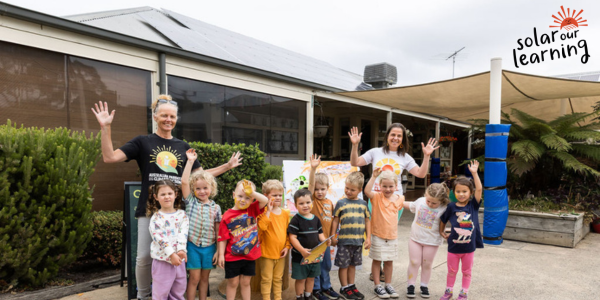
Add you name to the letter to state and federal leaders to show your support.
Dear Federal, State and Territory leaders,
We call on all governments to work together to Solar Our Learning, by funding solar and batteries for every school and early childhood centre in Australia (with means-tested grants for privately-owned schools and for-profit early learning centres).
If you’ve ever done school drop-off on a hot day, you’ve probably thought about the classrooms our kids sit in all afternoon.
Or wondered how schools and childcare centres cope as power bills keep rising?
That’s why more communities are looking to solar and batteries, helping schools and childcare centres:
- cut energy bills
- keep classrooms cooler during heatwaves
- stay powered during outages
Time and time again, educators, energy experts, and community leaders tell us the same thing: solar and batteries for schools and childcare is a no-brainer.
Your support will help us:
- Demonstrate parent demand for solar and batteries in schools and childcare centres
- Identify schools in each electorate where parents want upgrades
- Connect interested parents with their local MP to discuss solutions
Together we can show that powering schools and childcare with solar and batteries really is the common-sense solution communities are ready for.
Add signatureAdd your support
Tell us the school or childcare centre that matters to you.
And we'll make sure your federal representative knows you care.
-
Children on the Frontline of Australia’s Freight Pollution
Every day, children breathe polluted air near Australia’s roads and their developing bodies pay the highest price.
Children breathe 18 to 30 times per minute, compared with 12 to 16 in adolescents. This means their lungs receive higher doses of pollutants that deposit deep in the airways and enter the bloodstream. Exposure to truck emissions during childhood can:
-
Affect lung growth and immune function
-
Increase risk of asthma and other respiratory illnesses
-
Impair cognitive development
In Melbourne’s inner west, 41% of childcare centres and 36% of schools sit within 150 metres of a major truck route. At one childcare centre on a busy freight intersection, pollution levels were equivalent to children inhaling 8.4 cigarettes a day.
Across Australasia, 8.7% of new childhood asthma cases each year are caused by traffic emissions, with heavy vehicles responsible for roughly a quarter of that pollution. One in six schools and childcare centres across Australia’s capital cities are close enough to major roads to raise serious health risks.
Australia’s Truck Fleet: The Problem
Heavy vehicles make up a small fraction of Australia’s fleet but are a major source of air pollution:
-
13% of trucks comply with no emissions standards
-
47% meet standards pre-2011
-
Together, they produce roughly 25% of all on-road vehicle pollution
New research from the University of Melbourne, supported by Parents for Climate, shows these emissions have serious health and economic costs:
-
Over 2,000 premature deaths per year, each averaging 13 years of life lost.
-
$6.2 billion in annual health costs, including heart and lung disease, stroke risk, diabetes, inflammation, and lost productivity (Noting this is a conservative estimate).
Supporting Truck Drivers While Protecting Kids
Truck drivers keep our communities moving, delivering the goods we rely on. But the system they operate in puts children at risk. The government must support the industry, particularly small operators, who make up 92% of trucking businesses to transition to cleaner, safer vehicles.
“We love our village, but I shouldn’t have to worry whether the air my kids breathe at school is making them sick. With truck numbers rising and new infrastructure like the West Gate Tunnel, urgent action to electrify trucks would reduce pollution and protect children’s health.” — Jess Marsh, Yarraville, Victoria
“We get around by foot, bike, and scooter, but constant traffic fumes affect every part of our day. My daughter has frequent coughs, trouble concentrating at school, and has started snoring at night. Living so close to major trucking routes, it feels like we’re letting them down.” — Emily Buckley, Maroubra Junction, Sydney
What Experts Say
The federal government is revising the Heavy Vehicle National Law (HVNL) in 2026. Experts and health authorities agree that children’s health must be central to these reforms. They recommend:
-
Strengthen emissions standards for heavy vehicles. Include CO₂ and other pollutants in the standards to accelerate the shift towards zero-emission trucks.
-
Support truck drivers and small businesses. Small operators make up 92% of the fleet and need help with the upfront costs of switching to electric trucks, as well as reforms to weight and access limits so cleaner, heavier vehicles can operate safely on our roads.
-
Protect children and communities immediately. Establish buffer zones between freight corridors and schools, childcare centres, and playgrounds. Fund mitigation in high-risk areas, including green barriers and air filtration systems for schools near major truck routes.
“Our lungs are highly sensitive to the irritative and carcinogenic effects of truck pollution. There are no safe lower limits to these exposures.” - Associate Professor Louis Irving, University of Melbourne
“The cost of mitigating truck emissions is dwarfed by the benefits, healthier children, lower health costs, and stronger communities. Health must be central to heavy vehicle reform.” - Professor Mark Stevenson
National Reach and Momentum
The Truck Pollution Report has already sparked widespread media coverage:
-
ABC TV and radio interviews
-
Industry publications: The Driven, OwnerDriver, Australian Truck Radio
-
Online engagement: Reddit Australia
Communities, experts, and policymakers are coming together to demand change and the government has a critical opportunity this year.
Act Now for Our Kids
Parents, MPs, and policymakers have the chance to protect children’s health and secure cleaner air for the next generation.
We’re calling on Catherine King MP, Minister for Infrastructure, Transport, Regional Development and Local Government, to:
-
Strengthen emissions standards for heavy vehicles
-
Support truck drivers and small operators to transition to zero-emission trucks
-
Protect children with buffer zones, green barriers, and air filtration for schools near freight corridors
Show your support today — sign the open letter and help turn research into action:
https://www.parentsforclimate.org/clean_up_truck_pollution
Why Parents for Climate Is Campaigning
Parents for Climate exists to protect children from the health impacts of climate pollution. Diesel-powered trucks are a major source of both climate pollution and toxic air pollution in our communities.
Parents should not have to choose between functioning supply chains and their child’s lungs. We can have both.
Cleaning up Australia’s truck fleet protects children now and reduces climate pollution for the future. That’s why we’re calling for stronger emissions standards, support for small operators to transition, and practical protections for schools and childcare centres near freight routes.
-
-
Sign the Open Letter: Protect Kids from Truck Pollution
To the Hon. Catherine King MP
Minister for Infrastructure, Transport, Regional Development and Local Government
Dear Minister King,
We write to you as concerned parents, because the evidence is clear: truck pollution is harming our children, and the federal government has the power to act.
New research, authored by leading Australian academics has quantified what communities living on freight corridors have known for years.
Heavy vehicle exhaust emissions are causing preventable deaths and unnecessary illness. The annual health cost exceeds $6.8 billion - borne by patients, taxpayers, and workers.
Our children are the most vulnerable. They breathe faster. Their bodies are still developing.
- One in six schools and childcare centres across Australia’s capital cities are close enough to busy roads to raise serious health risks.
- Nearly 9% of new childhood asthma cases in our region are linked to traffic pollution, and heavy vehicles are responsible for a quarter of that pollution.
- Pollution at one approved childcare centre was equivalent to children inhaling the smoke from 8.4 cigarettes a day.
This is a national problem. Freight corridors run through suburban streets in Sydney, Melbourne, Brisbane, Perth and Adelaide. Parents in every capital city raise their kids in neighbourhoods, and send their children to schools where the air they breathe is making them sick and affecting their development.
Minister, this year your government will revise the Heavy Vehicle National Law. We urge you to use this opportunity to protect Australian children. Specifically, we call on you to:
- Strengthen emissions standards for heavy vehicles. Make CO2 emissions part of our Heavy Vehicle Emissions Standards to accelerate the shift towards zero emissions trucks.
- Support truck drivers and small businesses to accelerate the transition. 92% of trucking businesses are small operators. They need help with the upfront costs of switching to zero-emission trucks, and they need regulatory barriers like weight and access limits reformed so that cleaner, heavier electric trucks can operate on our roads.
- Protect children from truck pollution now. Establish buffer zones between freight corridors and schools, childcare centres and playgrounds. Fund mitigation in high-risk areas, including green barriers and air filtration systems for schools on freight routes.
We ask you to make children’s health part of the equation when you reform the Heavy Vehicle National Law this year. Our kids cannot wait.
Yours sincerely,
Parents for Climate
On behalf of parents, carers and grandparents across Australia
Add signatureAdd your name to stand with parents across Australia calling on Minister King to protect children from harmful truck pollution.
-
Laura Billings published The Facts on Truck Pollution in Clean Air For Kids 2026-02-20 15:03:06 +1100

Exposure during childhood can cause lasting damage to lung growth and immune function and is increasingly linked to impaired cognitive development. Every day, children breathe polluted air near our roads and their developing bodies pay the highest price.

Working with drivers, protecting our kids.
Road freight is the backbone of supply chains in Australia. Truck drivers are responsible for getting the goods we rely on to where they need to go cheaply and quickly. The government must support the truck industry - especially the small operators that make up the majority of our industry with reforms, and regulatory clarity that enable them to move to cleaner, safer vehicles.
This year the federal government is revising the Heavy Vehicle National Law, and so far, health has not been a part of the conversation. For the sake of our children, this needs to change.
Why Australia’s Truck Fleet Matters
Australia has an ageing truck fleet, where 13% of registered heavy trucks abide by no emissions standards, and 47% are only compliant with emissions standards set before 2011.
This means that while heavy vehicles make up a small fraction of the fleet, they produce roughly 25% of all on-road vehicle emissions, a primary source of population exposure to air pollution in Australia.

What the experts say: No standard, no protection.
The federal government is revising the Heavy Vehicle National Law (HVNL) in 2026, but health impacts have not yet been included. Experts recommend:
- Integrating health into Heavy Vehicle Emission Standards
- Accelerating the transition to zero-emission heavy vehicles in urban areas
- Rerouting freight away from schools and childcare centres
- Investing in mitigation measures like green barriers and air filtration in high-risk schools
Without these reforms, Australia’s truck fleet will continue to lag behind Europe, the US, and China and children will continue to bear the greatest burden.
Parents, MPs, and policymakers have an opportunity to protect children’s health and secure cleaner air for the next generation. We cannot afford to wait.
Show your support today. Sign the open letter: https://www.parentsforclimate.org/clean_up_truck_pollution
-
I’m Taking the Idle Off Pledge
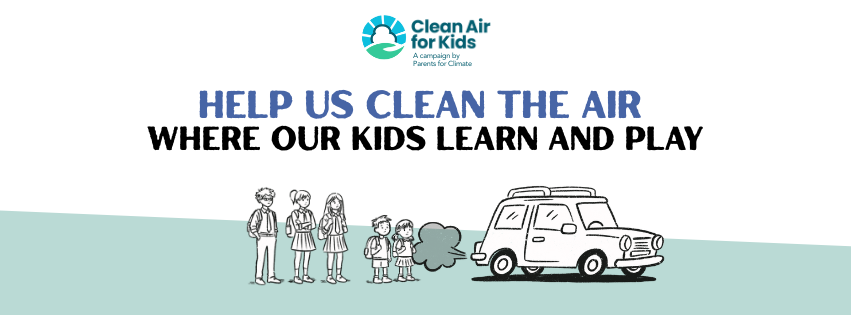
Every day, cars sit with engines running while parked - this is called idling. It might seem harmless, but idling creates concentrated pollution where children and families gather, especially at schools and childcare drop-off zones.
This pollution can affect developing lungs, hearts, and brains, increasing the risk of asthma and other health problems.
By turning engines off whenever it’s safe, we can reduce unnecessary exposure and keep our air cleaner and healthier.
 Add signature
I pledge to turn my engine off when waiting, especially near schools and childcare centres, protecting children’s health and keeping the air cleaner for everyone.
-
idle off acknowledgement
Acknowledgements
We'd like to acknowledge Clare Walter, Hannah Morrice, Belle Workman and Rebecca Patrick from the Climate CATCH Lab at the University of Melbourne for their valuable contributions to research and engagement on anti-idling and air pollution policy that underpin the Idle Off campaigns insights and advocacy.
Read more about their work here.

-
Become A Clean Air Rep
Want to help keep the air cleaner around your school or childcare centre?
Sign up as a Clean Air Rep and we will email you with a link to simple, ready-to-use resources to get you started.
 Add signature
I want to be a Clean Air Rep and bring Idle Off to my school or centre.
-
Idle More Questions
Do you have more questions?
-
You did something good today
Most of us are just trying to get through drop-off and pick-up, but switching engines off when we’re waiting is one small choice that helps protect kids from avoidable exhaust pollution.
If you’re up for it, you can also help bring Idle Off to your school or childcare as a Clean Air Rep.
It’s not a big job - it’s just starting a conversation, and we’ll provide simple templates and support.
✅ Yes, I can be a Clean Air Rep
-
Idle Off Q+A
Idle Off is about reducing unnecessary pollution where children gather. It’s flexible, practical, and grounded in care, with children’s safety and comfort always coming first.
Q: Does idling for just a minute really matter?
Even short periods of idling create concentrated pollution where children are standing. Kids’ lungs are still developing, so small exposures add up. Switching engines off reduces pollution immediately.
Fact: Leaving an engine running is equivalent to smoking a cigarette around a child.
Q: Why is the school or centre involved?
Schools and childcare centres have a duty of care to provide safe, healthy environments. Reducing avoidable air pollution at the gate is a simple, preventative health measure.
Q: Is this about climate change?
Idle Off is first and foremost about children’s health and clean air. While reducing pollution also helps the environment, the main focus is protecting kids’ developing lungs.
Q: I drive a low-emissions, hybrid, or electric car. Does it matter?
Yes and thank you for doing your part! Even hybrid or low-emissions cars can contribute to local air pollution through brake and tire dust, especially when many cars are idling together at school gates. Electric vehicles don’t produce exhaust pollution, but switching engines off still reduces unnecessary energy use and congestion, and supports the community norm of cleaner air for kids.
Q: Restarting the engine uses more fuel than idling, right?
For modern vehicles, this isn’t true. Restarting the engine typically uses less fuel than idling for more than a few seconds. Plus, idling unnecessarily increases wear and tear on your engine, which can reduce your car’s lifespan and efficiency. Reducing idling is better for the car, the air, and children’s health.
Q: My one car doesn’t make a difference.
When many cars idle together at school gates, pollution builds up quickly. Every engine switched off helps, especially for children standing nearby. One minute of a car's engine idling = 150 balloons worth of harmful pollution.
Idle Off works because it’s a community effort.
Q: What about buses, tradies, or delivery vehicles?
All drivers are encouraged to switch engines off where safe and practical. Schools often work with bus operators or contractors to support this. It’s about shared responsibility, not singling anyone out.
Q: What about hot or cold days?
Children’s comfort and safety come first. Idle Off is about reducing unnecessary idling where safe and practical, not policing or putting anyone at risk. Families should use common sense. In extreme heat or when children’s comfort or safety is at risk, families should do what’s appropriate for their situation.
See some other ‘Hot Weather Idling Tips’ below.
Q: I need to run the air conditioning for my other kids in the car.
Safety and comfort always come first. Idle Off encourages engines off where reasonable. Families should make decisions that keep children safe and comfortable.
Q: Is this enforced or monitored?
No. Idle Off is an awareness and education initiative, not an enforcement program. There are no fines or penalties, just friendly reminders and shared responsibility.
Q: This feels like blaming parents or a “nanny state.”
Idle Off is not about blame. Most people idle without realising the impact. It’s about providing information and encouraging small, voluntary actions to protect children’s health. Families are trusted to make sensible choices.
-
Idle Off - Our Impact
Our Impact Together
- Stat Squares (Number of champions, Number of Idle Free Schools + Childcares)
- Google Map of participating schools/areas