October is Mental Health Month, a time when communities across Australia come together to learn, reflect and take action to support better mental health for ourselves, our families, and our communities. As parents, many of us are already aware that the climate crisis is no longer a distant concern. Our kids are living through a time of increasing extreme weather, uncertainty and change. And they are asking big questions.
Supporting their emotional wellbeing (and our own) isn’t just important for mental health, it’s an essential part of raising empowered, resilient young people.
This month we're sharing a new resource developed by the Climate Mental Health Network, a leading organisation based in the United States working at the intersection of mental health and climate change. Their updated 40-page guide, Climate Change and Kids’ Well-Being: A New Guide for Parents and Caring Adults, offers compassionate, evidence-based tools to help parents navigate children’s emotional responses to the climate crisis and take positive steps forward.
This comprehensive guide includes:
-
How to talk to kids of all ages (0–18) about climate change with honesty and hope
-
Preparing for and responding to extreme weather events
-
Supporting children with diverse needs, including neurodiversity and mental health challenges
-
Parent wellbeing, including managing your own emotions and building resilience
-
Ways to engage teachers and schools to build a supportive community around your child
Explore the full guide here : https://www.climatementalhealth.net/parents-caregivers
One of the most powerful tools in the guide is the Climate Emotions Wheel, which helps children and adults identify and name complex emotions – such as grief, determination, hope, anxiety or gratitude – as a first step toward processing them. By making these feelings visible and normal, we can move from overwhelm to agency, and from isolation to connection.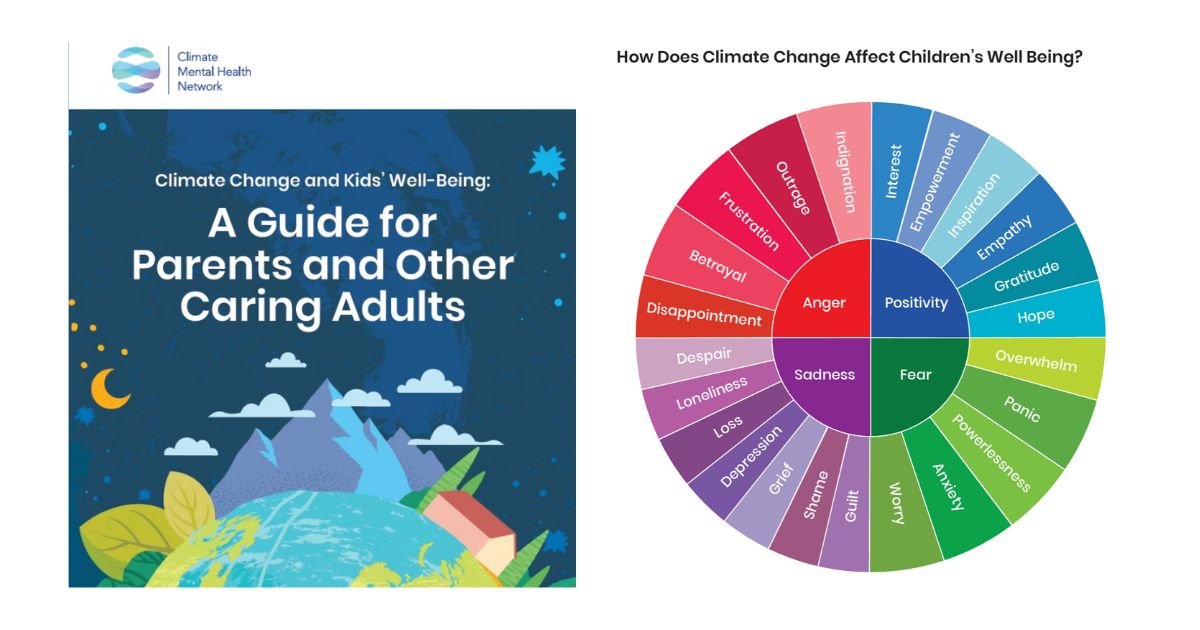
This resource is not about adding pressure on parents – it’s about offering support. It acknowledges that grief, joy, anger, calm, anxiety, and determination are all part of our lived experiences. And importantly, it reminds us that we are not alone. There is a growing network of parents, educators, and mental health professionals working together to support young people and each other through these times.
More helpful resources
-
Creative Acts for Climate Feelings (Black Dog Institute) – activities to help children express emotions through art and creativity
-
Climate Emotions in the Classroom (Orygen + STTOP) – practical strategies for educators
-
Psychology for a Safe Climate – community resources and climate cafés for adults and young people seeking connection and emotional support
We can draw on these resources to support our kids – and ourselves – not just cope, but thrive, and together, shape a future we can all be proud of.