Got an issue you'd love more people thinking and talking about? Letters to the editor of newspapers are a great way to make that happen.
And sharing your experiences and concerns can generate community discussion and encourage editors to cover these issues more.
Your local MP will keep an eye on the letters pages in newspapers in your area, so it's an effective way to get it on their radar, too.
How to write a letter to the editor
- Keep it short. Don't go over 200 words, and remember some great letters are just 20-50 words.
- Keep your letter constructive and aim to get the audience on side. Funny or clever letters are more likely to be published and stick in people’s minds, but avoid being sarcastic.
- Make just one or two key points. People read fast, so use short sentences. Avoid jargon or acronyms. Don't assume knowledge. Instead, ask yourself: will my letter make sense to people who don't know much about this issue yet?
- Make it timely – It's good to refer to articles or letters published yesterday or the day before. You can refer to local stories to illustrate your point.
- Be personal – Personal stories are often strongly relatable. In a few sentences, what did you experience? How did it make you feel? Why does this matter?
- Include a call to action – Ask your readers to do something about the issue, such as demanding action from their local MP etc.
Tips on how to get published
- Try to get your letter in before noon for daily newspapers – it’s more likely to get printed.
- Include your full name, address and a daytime phone number with your letter. Papers do not print all of this information but may use it for verification.
- Don't re-send the same letter again and again – Editors will notice and start to ignore you.
It's often competitive to get published, so don't be concerned if yours doesn't get through.
Even if you don't get published, it is valuable for the editor to hear what people in their community are concerned about. If you have a local paper, try it! There's often less competition than in big national newspapers.
And you might be wondering, does it really make a difference if I do get my letter published?
Letter writing extraordinare and Perth group leader Sonya shared with us "I was very surprised that [my] letter resulted in my state MP emailing me to say she agreed. Shows that they read the letters pages!" In addition to this, we know that reading creative letters focused on climate solutions also inspires others to take up writing and join the chorus for change!
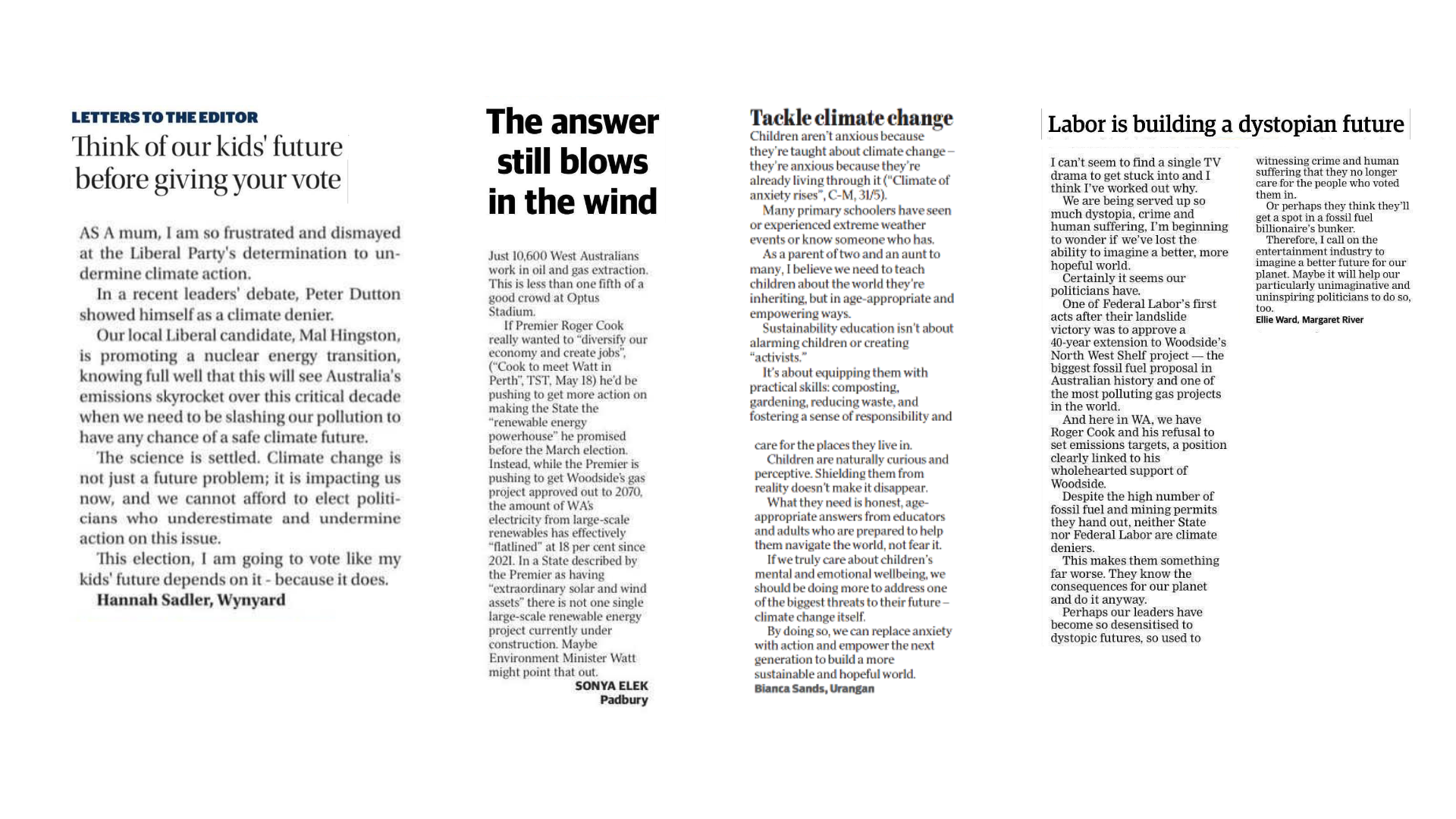
Examples of letters published by parents in our community
Need more tips or resources?
Feel free to contact our Community Resilience Manager, Bianca Sands via [email protected] for more details.