I’ve never exactly been blessed with a green thumb. My grandfather grew prize-winning onions. My dad spent countless weekends nurturing a backyard full of home grown produce that could rival the local market. Even my siblings seem to have inherited the gardening gene. Me? I once celebrated keeping an indoor plant alive for 12 months.
But a few years ago, something shifted.
Watching the documentary Kiss the Ground changed how I see the world and my role in it. It was confronting to learn how fragile our food systems are, and how much industrial agriculture contributes to climate change and the degradation of our soils, an incredible natural carbon sink. But it was also hopeful, showing how regenerative farming and soil health can actually heal the planet. That film planted a seed in me (pardon the pun): if we can restore the earth on a global scale, surely I can start small right in my own backyard.
Why Growing Food Matters
My concern about food insecurity was what first motivated me to learn more about climate change. The idea that something as fundamental as food, what we feed our children, could become uncertain or inaccessible really hit home.
So, despite my less-than-stellar gardening record, I decided to create my own little patch of security: a veggie garden that was organic, local, and resilient. It wasn’t just about tomatoes and lettuce; it was about reconnecting to the cycle of care for the earth, for my family, and for our shared future.
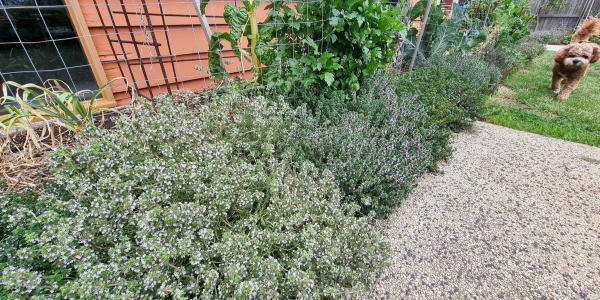
One of my veggie patches at home - thyme anyone?? Lots of thyme....
Spring Gardening in Victoria
Here in Victoria, we’re lucky to live in a temperate climate zone, which means spring is a wonderful time to get growing. If you’re not sure what zone you’re in, check out this handy guide: Planting the Best Spring Crops in Australia. It’ll help you choose the right things to plant at the right time for your local conditions.
Some of my go-to spring veggies include:
🥕Carrots and beetroot – hardy, reliable, and kid-friendly.
🍅Tomatoes – the classic crowd-pleaser (even if mine still can’t match Dad’s).
🥬Lettuce and spinach – fast-growing and perfect for lunchbox salads.
🫛Beans and peas – fun for kids to plant and watch grow.
🌱Herbs - we love basil and it’s a great companion your tommy matoes:) I also avoid one of my pet peeves of having to buy food wrapped in plastic, why oh why? But that’s a topic for another blog LOL.
When planning your garden, think practical. What will your family actually eat? There’s no point in growing endless kale if it’ll just wilt in the fridge. Involve your kids in the process from picking seeds to watering and harvesting. Time and time again, I hear that even the fussiest eaters will happily eat what they’ve grown themselves.
Lessons from Regenerative Gardening
Along the way, I’ve found myself drawn to the principles of permaculture: earth care, people care, and fair share. These simple philosophies remind me that every small action, every handful of compost, every homegrown meal is part of a bigger story about restoring balance.
Gardening has become more than a weekend hobby. It’s an act of hope. It’s grounding (literally and emotionally), and it reminds me that change doesn’t always come from grand gestures sometimes, it starts with a single seed.
A Growing Reflection
If you’re feeling anxious about food security, climate change, or just the state of the world - I get it. But there’s something deeply reassuring about getting your hands in the soil and seeing life emerge. It’s proof that we can nurture resilience.
So, if you’ve been thinking about starting a veggie patch, no matter how small, this spring might be the perfect time. And if your tomatoes end up looking a little misshapen or your zucchinis take over the yard, just remember: it’s not about perfection, it’s about participation.
Because when we grow food, we’re also growing connection, confidence, and care for our kids, our communities, and our planet.
It’s a way to reconnect to the seasons, to witness the circle of life unfolding right in our backyard, and to remember that we are all part of nature. Every seed we plant, water, and nurture is a small act of harmony with the world around us; a reminder that our wellbeing, and that of our children, is intimately linked with the health of the earth.

Author: Laura Billings who is lucky to live and work on Wadawarrung Country.